Home › Services › EICR & Electrical Safety Certificates
An EICR is a full inspection and test of the fixed wiring in a property, ending in a written report that says whether it is safe to stay in service. We carry them out for landlords, homeowners, buyers and businesses across East Sussex — and explain every observation in plain English before you decide anything.
WHO THIS IS FOR
You do not need a fault to need an EICR. Most people booking one are here:
Not sure which you are? Ring 0333 360 8583 and describe the property — you will be told what you actually need, including if that is nothing.
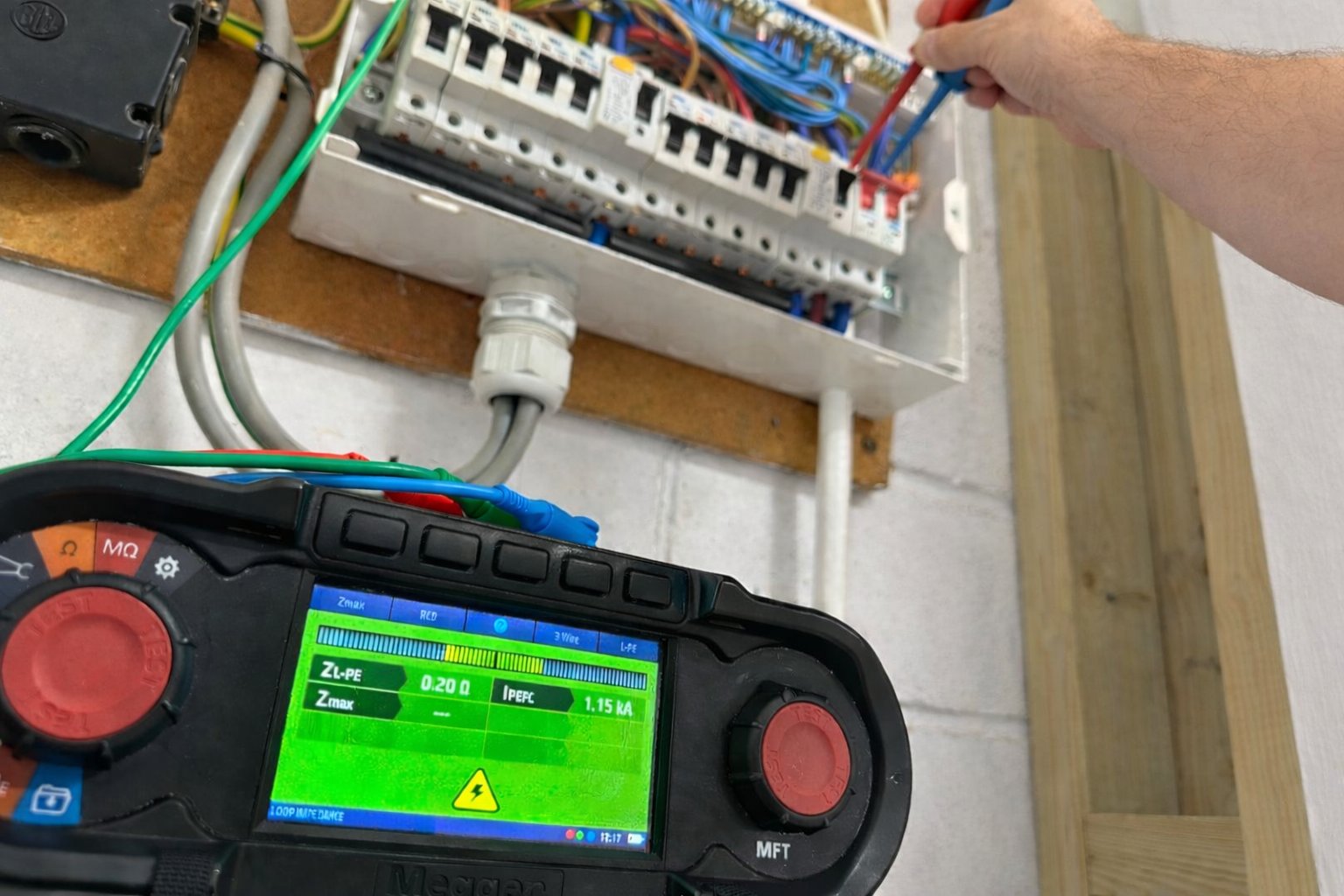
An EICR — Electrical Installation Condition Report — is a periodic inspection of the fixed installation: the supply and earthing arrangement, main bonding to gas and water, the consumer unit ("fuse box"), the cables in your walls, floors and loft, and the accessories on the end of them. Appliances and extension leads are a separate job.
Half the work is visual — damaged accessories, scorching at terminals, missing earths at lighting points, undersized bonding, DIY work in bathrooms. Half can only be found with instruments: insulation degrades from the inside, an earth path can be broken at a junction nobody can see, a ring final circuit can have a broken leg and still work until it is loaded, and an RCD can look immaculate and still fail to disconnect fast enough to protect anybody.
You end up with a report: what was inspected, any agreed limitations, a schedule of circuits and test results, observations with classification codes, and one verdict — Satisfactory or Unsatisfactory. It is not an Electrical Installation Certificate, which certifies new work such as a rewire, and it is not an exam a friendly electrician can help you scrape through.
LANDLORD DUTIES
The Electrical Safety Standards in the Private Rented Sector (England) Regulations 2020 apply to most private tenancies. In outline, a landlord must:
Local authorities can serve remedial notices and impose financial penalties — the regulations provide for up to £30,000 per breach.
The duty is that a valid report exists and reaches the new tenant before they occupy, so a satisfactory two-year-old report is generally the one you supply. A fresh inspection is worth it where the outgoing tenant may have altered something, after damage or a long void, or where the report would otherwise lapse mid-tenancy.
Written to help you ask the right questions, not as legal advice. Wales, Scotland and Northern Ireland differ and guidance changes — check the regulations, current government guidance or your local authority before relying on this.
No law makes an owner-occupier hold an EICR, but the wiring is out of sight for decades, surveyors recommend an inspection they cannot carry out themselves, and a report before exchange turns "old wiring" into a specific, costed list. For businesses the driver is the Electricity at Work Regulations 1989: systems must be maintained so far as is reasonably practicable to prevent danger, and periodic inspection — fixed wire testing — is how that is demonstrated. Your insurer or lease may set the interval.
BOOK OR ASK
Tell us the property type and roughly how many ways are on the consumer unit, and you will know what the job involves before anything is agreed.
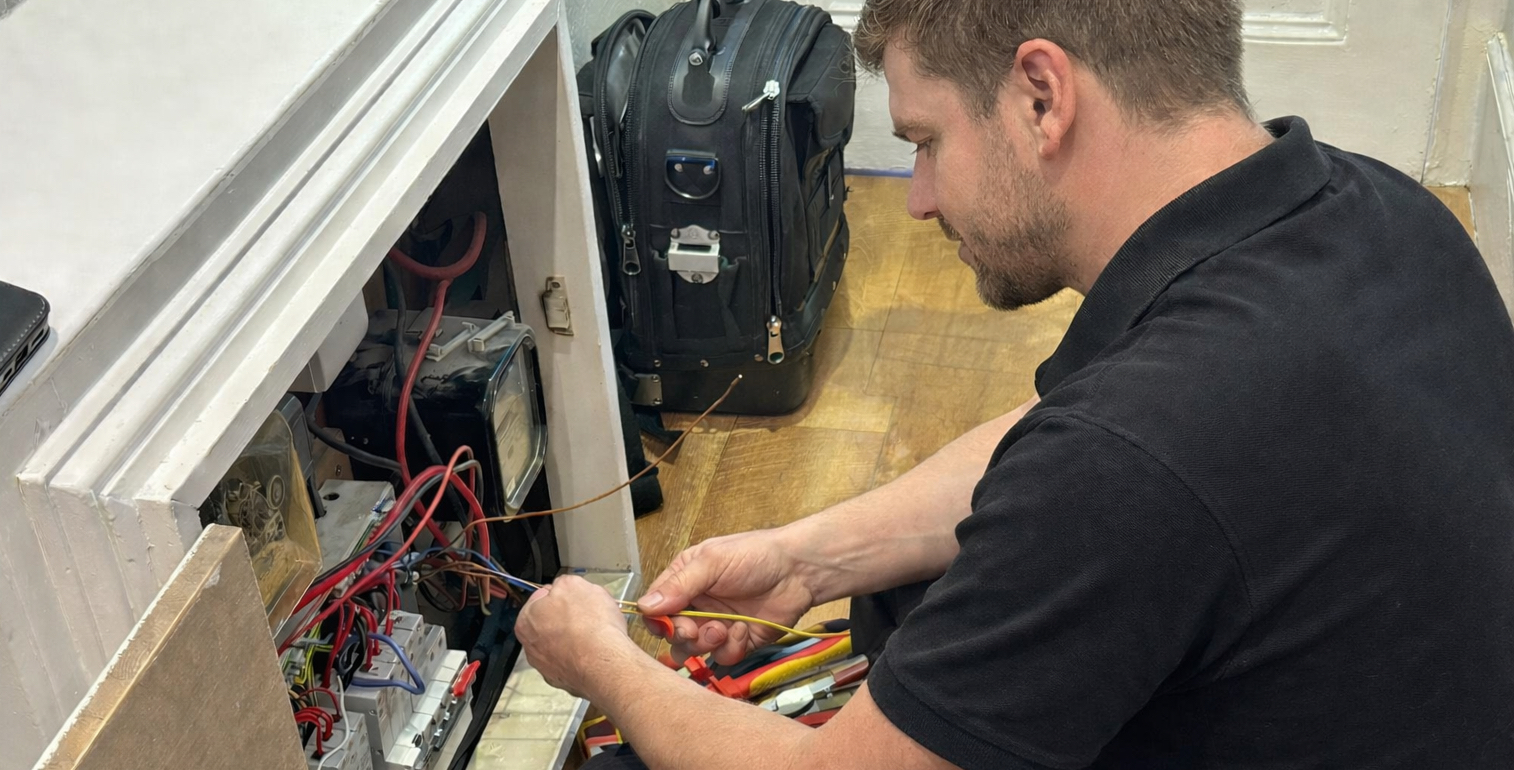
UNDERSTAND THE CODES
Someone could be hurt now: a live part accessible, an accessory broken open. Requires immediate action, and where reasonable it is made safe on the spot and recorded. Report is Unsatisfactory.
Safe now, dangerous if a fault occurred — no earth serving metal fittings, a broken ring leg, a missing main bond to the gas service, insulation resistance showing real deterioration. Urgent work needed. Unsatisfactory.
Not dangerous, and compliant with the standard it was built to, but better brought up to current practice — a plastic consumer unit, say. C3s do not make a report Unsatisfactory, though they tend to become C2s as an installation ages.
Something could not be resolved within the extent of the inspection and may matter: a reading that does not add up, a circuit that cannot be traced. Unsatisfactory — because nobody yet knows.
C1 and C2 mean act. FI means find out. C3 means consider.
Satisfactory means no C1, C2 or FI — a satisfactory report with a page of C3s is normal for an older property. Unsatisfactory means at least one of the three, and much local housing stock was wired to standards that have since changed, particularly around RCD protection and bonding, so it is not an accusation. The report does not turn satisfactory afterwards: whoever does the remedial work certifies it and confirms in writing that the observations are addressed, and that confirmation, held with the report, demonstrates compliance.
COMMON FAILURES
An RCD disconnects within milliseconds when current leaks to earth, usually through a person. Older boards have none, and where cables run shallow in walls, in bathrooms, or on sockets that could feed equipment outdoors, that absence is commonly coded C2.
Gas and water should connect to the main earthing terminal through an adequately sized conductor. It is often missing, too thin to survive a fault, or cut during a boiler change and never reinstated. A common C2, usually cheap to correct.
Older lighting circuits were frequently wired with no circuit protective conductor. Acceptable then; a real problem the moment a metal light fitting goes up, so commonly coded C2 where such fittings are present.
A ring final circuit with a broken leg still works, but part of it is now a long radial carrying more current than the cable was sized for. Two circuits sharing a neutral makes isolation dangerous and stops RCDs working properly. Only testing finds either.
Resistance measured between conductors, and to earth, describes the state of the insulation. Readings falling towards the minimum may indicate moisture, thermal damage, a screw through a cable, or age. Very low values are a C2.
Missing blanks leaving live parts accessible (a C1), scorched terminals, cracked socket fronts, undersized meter tails, no circuit chart, perished rubber-insulated cable, and bathroom accessories without adequate protection against water.
Work of this kind is covered on our fuse box and consumer unit repairs, consumer unit replacement and socket repairs pages.
KNOW THE SIGNS
Discolouration means heat, and heat at an accessory usually means a loose connection or an overload: the terminal arcs, the arcing heats it, the heat degrades it further. A fire risk that should not wait for a booked appointment — see burning smells and dangerous electrics.
A little voltage drop as a large load starts is normal. Noticeable, repeatable dimming may indicate a high-resistance connection upstream, undersized supply cabling or a loose neutral, and is worth testing.
Age alone is not a fault and no law forces you to replace a working board. But rewireable fuses, no RCD and a wooden or cast-iron case usually mean an installation predating several major changes to the wiring standards, and an EICR tells you how much behind it was ever updated.
Three symptoms usually need fault finding before an inspection is worth doing: an RCD that will not stay on, losing power to part of the property, and a buzzing fuse box. Mention them when you book.
BEHIND THE READINGS
Thermal cycling. Conductors expand under load and contract as they cool, so a tight terminal becomes marginal over years. Resistance rises, which makes heat, which loosens it further — why scorching appears at sockets on heavy circuits and at board terminals rather than randomly along a cable.
Moisture. Coastal exposure, solid walls, leaking flat roofs and outside sockets with failed seals all let water in. Water lowers insulation resistance long before there is anything to see, which is why it is measured.
Mechanical damage. Nails, screws and fixings through cables, or a cable dragged over a sharp edge during a loft conversion. Often it only partly penetrates the insulation and shows up purely as a degraded reading.
Corrosion. Salt air attacks earth clamps on gas and water pipes, so near the coast a bond that looks present can still have unacceptably high resistance.
Ageing insulation. Rubber hardens and cracks; early PVC near recessed lighting or hot pipework loses plasticiser and goes brittle. A documented process, not a sales pitch for a rewire.
Alterations and changed use. Spurs off spurs, cable of the wrong type, earth continuity lost at a replaced accessory — and a house wired for a 1970s household now running an induction hob, an EV charger and a home office.
OUR METHOD
In the order the work is done. Dead tests come first, because a fault found dead is a fault nobody has energised.
The instruments and parameters behind each test are covered on our electrical fault finding page.
SIMPLE PROCESS
SAFETY FIRST
A burning or acrid smell from a socket, switch, light fitting or the board. Scorch marks or melting on any accessory. Anything hot to the touch. Buzzing or crackling at the consumer unit. A shock or tingle from a tap, radiator or appliance casing, even a mild one — that can indicate lost earthing. Exposed conductors. Water reaching electrical equipment. A breaker or RCD that trips again the moment it is reset.
If there is fire or smoke, or anyone has had a shock injury, call 999 first. If neighbours have no power either, call 105 free for the network operator. Otherwise use our emergency electrician or 24 hour electrician service.
If you have switched something off because of a smell, a burn mark, water or a shock, leave it off until it has been inspected.
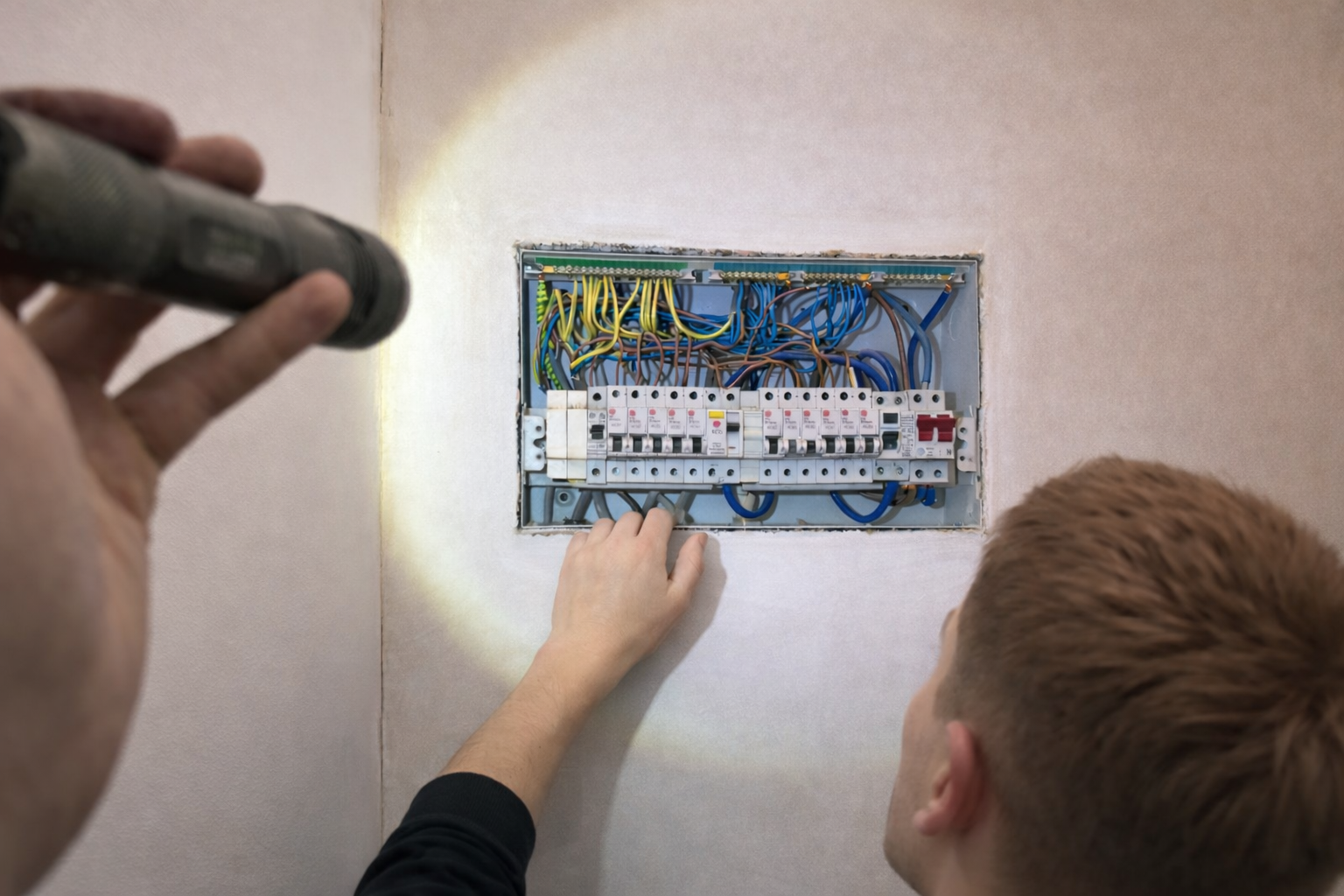
What is right for your property depends entirely on what the testing found — none of this should be recommended without results behind it.
Part P notification is narrower than most people assume: in England it covers a new circuit, a consumer unit replacement, and work in a room with a bath or shower. Renewing a bond or replacing a socket is repair work and is not notifiable, though it should still be certified. As Part P registered, notifiable work we carry out is certified and notified.
CASE STUDY
Location: Lewes, rented flat
Customer's problem: A landlord needed an EICR before a new tenancy began.
Initial symptoms: Nothing reported by the outgoing tenant — a routine compliance inspection.
Tests performed: Full periodic inspection and testing: continuity, insulation resistance, polarity, earth fault loop impedance and RCD operation on every circuit, with the consumer unit opened under safe isolation.
Fault discovered: Two C2 observations — no RCD protection on the socket circuits and a missing main protective bond to the incoming water — plus several C3s worth improving.
Repair: RCBOs fitted to the socket circuits and 10 mm² main protective bonding installed.
Final testing: Affected circuits retested and the report re-coded once the remedial work was complete.
Outcome: Satisfactory EICR issued with a full schedule of test results, leaving the landlord compliant with the 2020 regulations.
An illustrative example of a typical call-out of this kind.
EICR PRICING
An EICR is a booked inspection rather than an emergency callout, so it is priced on the property: [INSERT REAL PRICE]. Ring with the address and the number of ways on the consumer unit for a straight figure. Emergency callout charges are separate and fixed by time of day; additional work is quoted and agreed before it begins.
| Callout | Fixed charge |
|---|---|
| Basic callout, 9:30am–3pm (not guaranteed within the hour) | £110 |
| Day callout | £130 |
| Early evening callout | £180 |
| Overnight callout | £250 |
Landlord or agent with several properties in Bexhill, Hastings or Eastbourne? Say so when you call. Tell us how many and where they are, and they can be quoted and scheduled together.
STRAIGHT PRICING
Call with the address and the number of ways on the board, or request a callback and we will come back to you.
WHY POWER PROS
City & Guilds qualified, Part P registered electricians. Coding is a judgement about risk, and it needs someone who knows BS 7671 and the standard the installation was built to.
An inspection is only as good as the person reading the results — experience is what tells you whether an odd reading is a wiring fault, an appliance, or a limitation of the test.
A PDF full of codes is little use to a landlord with 28 days to act. Every observation is talked through in priority order, with a clear line between required and optional.
Fully insured up to £2,000,000, with a 100% satisfaction guarantee on all services and work complying with current British Standards and Building Regulations.
Bexhill-on-Sea, Hastings, Eastbourne and all of East Sussex, 24 hours a day, 7 days a week — so inspections fit around tenants, trading hours and shifts.
If the inspection turns up something that cannot wait, the same firm deals with it. Every callout includes visual inspection and circuit testing, and 85% of emergency callouts are resolved on the first visit.
CUSTOMER REVIEWS
“Power Pros provided an excellent service from start to finish. They responded quickly, arrived when they said they would, and got straight to diagnosing the problem. Everything was explained clearly, with no pressure or hidden costs, which was really reassuring in an emergency situation.”— Tina, Google review
“Fast, reliable and genuinely professional service. The emergency electrician Harry diagnosed the issue straight away, explained everything clearly, and carried out the repair safely and efficiently. Pricing was fair with no hidden surprises, and the work was left neat and tidy.”— Steve, Google review
“Great service, we will use them again. 5 stars.”— Brian Hearn, Google review
Reviews from our Google Business Profile, rated 5.0 from 10 reviews. Read them on Google.
YOUR QUESTIONS ANSWERED
It depends on the number of circuits, how accessible the board, loft and sockets are, and what turns up along the way. A six-circuit flat is a fraction of the work of a five-bedroom house with outbuildings. Tell us how many ways are on the board and we will give you a realistic estimate.
For part of the visit, yes — insulation resistance, continuity and polarity can only be tested with the installation isolated and proved dead. We work circuit by circuit and restore supply as we go. Tell us in advance about freezers, aquariums, alarms or medical equipment and we will plan around it where we can.
Someone must give access, and the extent and limitations have to be agreed with whoever is responsible for the property before we start. For a tenanted property we are happy to arrange access with your tenant directly and report back to you.
For a private rented property in England, at least every five years, or sooner if the report specifies a shorter interval. For owner-occupied homes ten years is the commonly cited guidance, and sooner when buying or after significant alterations. For commercial premises it varies by premises type and is often set by your insurer or lease.
C1 items need immediate attention and should already have been made safe. C2 and FI items need putting right — and if you are a landlord in England, within 28 days of the inspection or sooner where the report specifies. C3 items are recommendations. Once the work is done it is certified, with written confirmation that the observations have been addressed.
No. C3 observations do not make a report unsatisfactory. They are improvements against current practice, not defects, and a perfectly safe older installation can collect a page of them and still be assessed as satisfactory.
No, and nobody honest can. We can carry out the remedial work that resolves C1, C2 and FI observations, after which the installation genuinely meets the standard and that work can be certified. What we cannot do is record an installation as safe when the testing says otherwise.
No. An EICR covers the fixed wiring — supply, earthing and bonding, consumer unit, cables and accessories. PAT testing, properly called in-service inspection and testing of electrical equipment, covers plug-in appliances. They are separate pieces of work and one does not substitute for the other.
No. That will have been an Electrical Installation Certificate, which certifies new work by the person who carried it out. An EICR assesses the condition of an existing installation at a later date. Neither replaces the other.
There is no legal requirement for an owner-occupier to hold one, and none triggered by a sale. In practice, conveyancing enquiries commonly ask about electrical work and Part P notification, and surveyors routinely recommend an inspection because they cannot assess the wiring themselves.
Anything coded C1 means danger is present, so where it is reasonable to do so the situation is made safe on the spot, usually by isolating the affected circuit, and what was done is recorded on the report. You are told immediately, and if urgent repair work is needed we cover that 24 hours a day.
No. The report is yours and you can take it to any competent electrician. Remedial work is quoted separately and itemised against the numbered observations so you can compare quotes properly. If anyone hands you a lump sum with no reference to the report, ask for it to be broken down.
MORE FROM POWER PROS
AREAS WE COVER
Power Pros cover Bexhill-on-Sea, Hastings, Eastbourne and towns right across East and West Sussex, 24 hours a day. Towns shown as a link have their own page; for anywhere else on the list, call 0333 360 8583 and tell us the postcode.
East Sussex
West Sussex
24/7 BOOKING LINE
A landlord deadline, a report you do not understand, or a property you simply want checked properly — Bexhill, Hastings, Eastbourne and across East Sussex, 24 hours a day.
