Home › Services › Electrical Fault Finding
Something on your electrics has failed and nothing obvious explains it. Fault finding is the methodical business of tracking that fault down by measuring it, not guessing at it. Power Pros trace electrical faults across East Sussex at any hour, and tell you plainly what the readings show.
KNOW THE SIGNS
If you recognise yourself here, the cause needs finding before anything can sensibly be repaired.
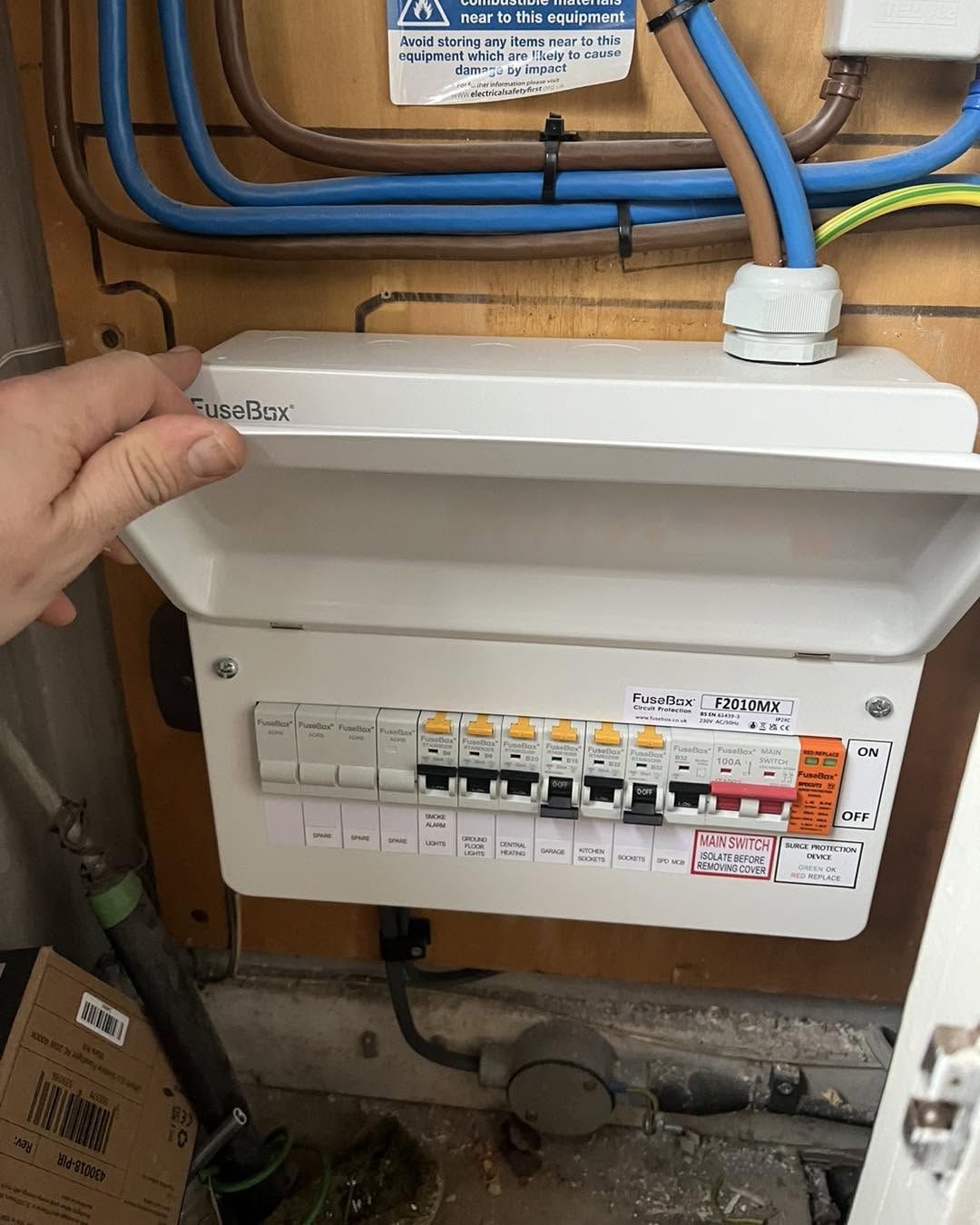
Fault finding is diagnosis. It happens before a repair, and it is a genuinely separate skill from installing.
When a circuit fails the fault is almost never visible — a cable pinched behind plasterboard, water tracking across the back of a socket, an element split inside an immersion heater. You only see the symptom.
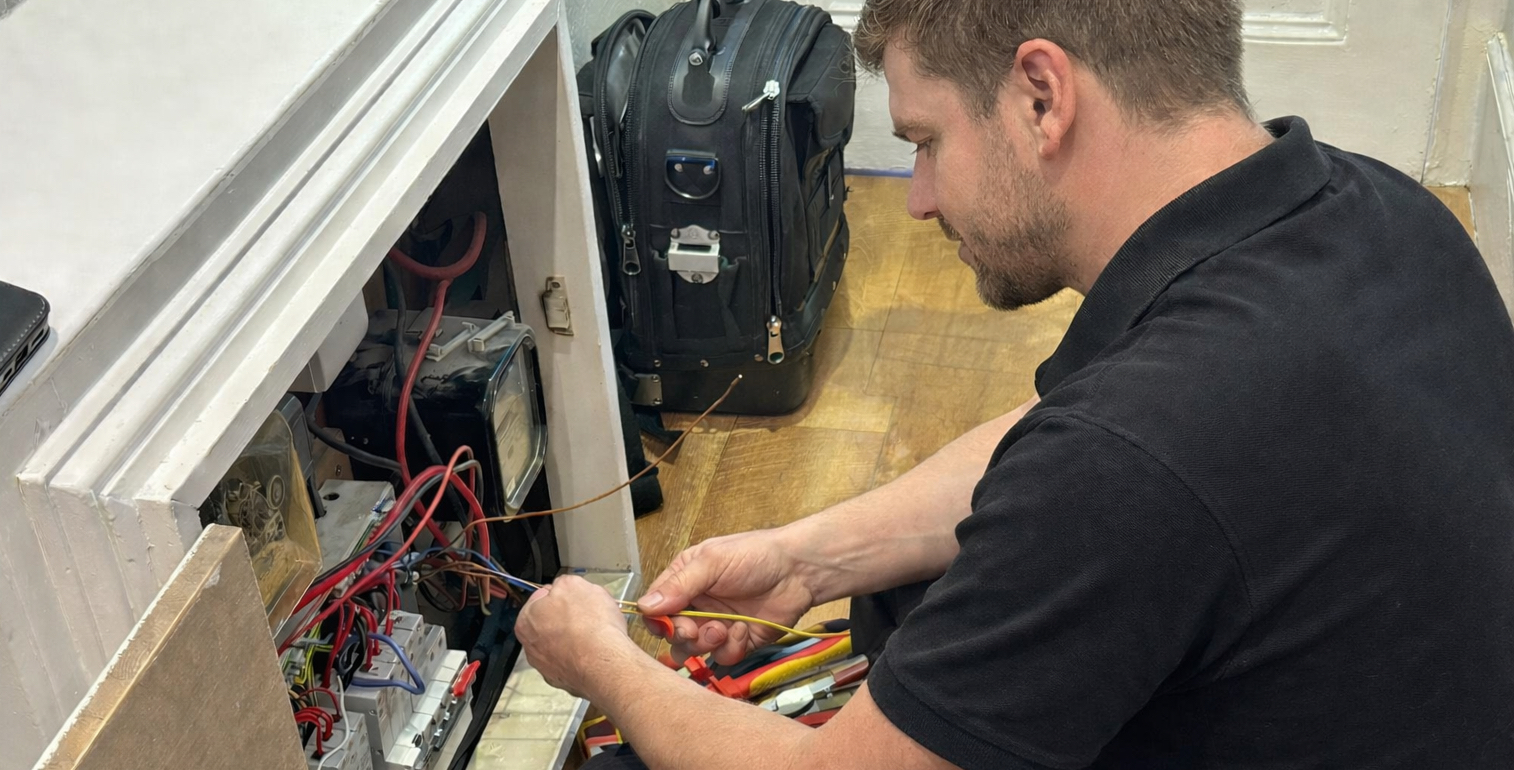
Our job is to work backwards from symptom to cause with instruments that measure what is happening inside the wiring: the insulation quality of a buried cable, the resistance of the earth path, the current leaking to earth.
FAULT CATEGORIES
Different behaviours need different approaches, so the category matters as much as the symptom.
A short circuit between conductors, or a solid earth fault. The easiest kind to find, because it is present all the time and holds still for testing.
Usually thermal or load-related — a loose termination heating up, or leakage that only crosses the threshold once several appliances run together.
Often cumulative leakage across many appliances rather than one defect. Measured with a clamp meter, not deduced. See RCD tripping.
A broken conductor or a failed connection at a junction. Continuity testing brackets the break between two known points.
Outside sockets, garden lighting, outbuilding supplies, buried cable, rain into a loft. Awkward, because the fault can be invisible on a dry day.
Almost always intermittent, on a circuit that tests perfectly while the fault is absent. Needs provoking, load testing or monitoring.
COMMON SYMPTOMS
An RCD that refuses to reset has detected a real imbalance between the current going out and the current coming back. Something is leaking to earth, and the first job is establishing which circuit. See RCD tripping.
Weather-dependent tripping points strongly to water reaching a live part — a perished seal on an outside socket, a shed supply, rain into a loft. On a coastal installation, salt-laden damp makes this more likely.
Dimming under load commonly indicates a high-resistance connection somewhere in the supply path. The voltage dropped across a loose or corroded joint turns into heat at that exact point, which is why it should not be lived with. See lighting faults.
Usually a timed load rather than a coincidence: immersion or storage heating on an off-peak supply, a freezer defrost cycle, an EV charger on a schedule. A faulty element commonly leaks only while energised.
ROOT CAUSES
Nearly every fault comes down to one of a small number of mechanisms, and knowing which is what makes a repair permanent.
The commonest cause of earth leakage in homes: outside sockets, garden lighting, shed supplies, buried cable. Water does not have to be visible to conduct.
Nails and screws driven in during flooring or plasterboarding. A screw sitting in the insulation can take months to break through, so the fault appears long after the work.
Immersion heaters, showers, washing machines, ovens. An element cracked internally lets moisture reach the live conductor and leak straight to the earthed metal casing.
A loose terminal has resistance, resistance under current makes heat, and heat makes the connection worse still — the mechanism behind most scorched terminals and burning smells.
Rubber and early PVC insulation goes brittle and cracks, especially where warmed. Such wiring can still work while its insulation resistance has fallen far below acceptable levels.
Most modern appliances leak a little to earth by design. Enough behind one RCD and the total sits close to the threshold, so the smallest change tips it over.
OUR DIAGNOSTIC METHOD
This is the part of the service you are really paying for, so here is the actual sequence an electrician fault finding on site should follow.
Which combination reads low is as informative as the number itself. This is where the test stops being pass-or-fail and becomes diagnosis:
A low reading that recovers the moment one section is disconnected is the strongest single piece of evidence in fault finding: it localises the fault and proves it in one measurement.
The core problem is unavoidable: a fault that is not present cannot be measured. Insulation that breaks down only when damp reads perfectly on a dry Tuesday. So we provoke it rather than wait for it — wetting a suspect external accessory, loading the circuit that triggers it, running the shower or immersion heater. Measuring standing earth leakage also puts a number on how close a circuit is to its limit even while nothing trips.
Where a fault appears every few days rather than on demand, monitoring over time is often cheaper and far more conclusive than a long visit watching a healthy circuit behave normally. If we attend and the fault is absent, we will say so plainly and tell you whether we found it or merely narrowed it.
24/7 EMERGENCY LINE
Describe the symptoms and we will tell you what is likely involved before anyone sets off. 24 hours a day across Bexhill, Hastings, Eastbourne and East Sussex.
WHAT TO EXPECT
STAY SAFE
Then call us. Do not wait for working hours if there is a burning smell, buzzing or crackling, scorch marks or melting, a tingle from a tap or appliance, water reaching electrical equipment, or anything too hot to touch. See burning smells and dangerous electrics.
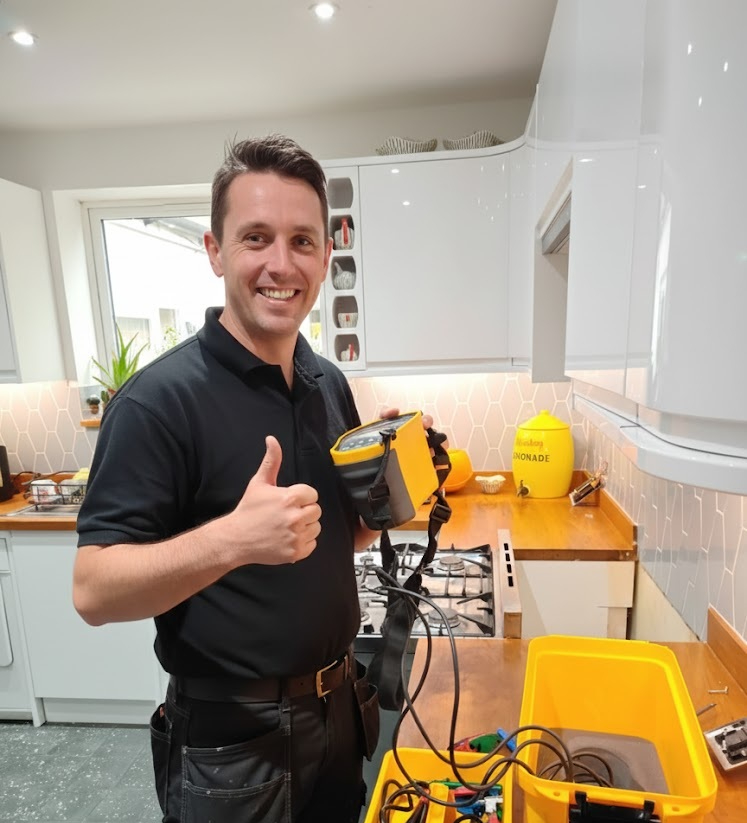
Electrical fault repair depends entirely on what the testing reveals. In rough order of how often each turns out to be the answer:
Anything outside the original scope is quoted before work starts. All work is tested to BS 7671, complies with current British Standards and Building Regulations, and carries our 100% satisfaction guarantee.
CASE STUDY
Location: Collington, Bexhill-on-Sea
Customer's problem: An RCD tripping at random for three weeks. Two other electricians had been out and not found it.
Initial symptoms: No pattern the customer could see, though it happened more often in wet weather.
Tests performed: Clamp meter used to measure standing earth leakage on each outgoing circuit, insulation resistance throughout, then appliances staged back on under load.
Fault discovered: Cumulative leakage rather than one defect — a dishwasher, an immersion and a garden supply each contributing a few milliamps, tipping the 30 mA RCD once all three ran together.
Repair: Garden circuit moved onto its own RCBO and the failing dishwasher element isolated pending replacement.
Final testing: Standing leakage re-measured circuit by circuit, with RCD and RCBO trip times recorded.
Outcome: No further tripping. The customer was given the leakage figures in writing so the improvement could be evidenced.
Replace with a genuine job record, used with the customer's permission and no identifying details. The strongest version quotes the insulation resistance reading before the repair and the same reading afterwards.
CALLOUT PRICING
Our callout charge is fixed and set by the time of day you need us. It is confirmed on the phone before we set off, and it includes a visual inspection and circuit testing.
| Callout | Fixed price |
|---|---|
| Basic callout — 9:30am to 3pm, not guaranteed within the hour | £110 |
| Day callout | £130 |
| Early evening callout | £180 |
| Overnight callout | £250 |
Any additional work beyond the callout is quoted and agreed with you before it begins. Extended diagnostic time is charged at [INSERT REAL PRICE].
Nobody knows where a fault is until it has been traced. Two identical symptoms can take twenty minutes and six hours — one is a leaking kettle found with a clamp meter on the doorstep, the other a screw through a cable under a fitted kitchen floor. A fixed price for an unknown fault has to assume the worst case, so most customers would pay for a difficulty they never had.
STRAIGHT ANSWERS
Tell us the symptoms and we will tell you which callout applies and what is likely involved. No obligation, and no surprises on the doorstep.
WHY POWER PROS
Diagnosis is pattern recognition as much as technical skill, and 25 years across East Sussex housing stock is what shortens the search.
Parts are changed when a test shows they are faulty, not because swapping them is quicker than measuring.
Part P registered, City & Guilds qualified, working to BS 7671 and current Building Regulations.
85% of our emergency callouts are resolved on the first visit — diagnosed and repaired in one attendance wherever parts and access allow.
24 hours a day, 7 days a week, with a 1 hour response — which matters when a fault only appears at 1am.
Fully insured up to £2,000,000, with a 100% satisfaction guarantee on all our work.
CUSTOMER REVIEWS
“Fast, reliable and genuinely professional service. The emergency electrician Harry diagnosed the issue straight away, explained everything clearly, and carried out the repair safely and efficiently. Pricing was fair with no hidden surprises, and the work was left neat and tidy.”— Steve, Google review
“Very happy with Aaron this service the electrician came out quickly within 1 hour and fixed a fault tripping out my electrics which turned out to be a water leak getting into a socket outlet. Highly recommended electricians.”— Alan, Google review
“Power Pros provided an excellent service from start to finish. They responded quickly, arrived when they said they would, and got straight to diagnosing the problem. Everything was explained clearly, with no pressure or hidden costs, which was really reassuring in an emergency situation.”— Tina, Google review
Reviews from our Google Business Profile, rated 5.0 from 10 reviews. Read them on Google.
YOUR QUESTIONS
By measurement, not inspection. The circuit is safely isolated, dead tested for insulation resistance and continuity, live tested where relevant, then split in half repeatedly until the fault is localised to one section, accessory or appliance.
Nobody knows where a fault is until it is traced, and a fixed price would have to cover the worst case. Our callout is fixed by the time of day, and anything beyond it is quoted and agreed before it begins.
Mostly it depends on whether the fault is present when we arrive. A constant fault on an accessible circuit is often quick; an intermittent one may need provoking or monitoring. We resolve 85% of emergency callouts on the first visit.
Usually. Most faults are located by testing from the consumer unit, socket outlets and light fittings, and by splitting the circuit at junctions that already exist. Cable tracing means anything opened up is opened once, in the right place, and agreed with you first.
Almost certainly. It commonly means earth leakage sitting just below the trip threshold and crossing it when conditions change, such as damp weather. A clamp meter shows how close to the limit a circuit is running even while nothing is tripping.
Very often. Showers, immersion heaters, washing machines and tumble dryers are the usual suspects: an element cracked internally leaks to its earthed casing. Confirming that saves you chasing an electrical wiring fault that is not in your walls.
Yes. The device operated because it detected a fault, and resetting it re-energises that fault. Never force it back on where there is burning, arcing, heat or visible damage. Leave it off and call an electrician.
We will tell you honestly. An absent fault cannot be measured, but we can try to provoke it, test under load, measure standing leakage and compare circuits against each other. Occasional faults are often best resolved by monitoring over time.
Usually the repair treated the symptom rather than the cause, there were two faults and one was missed, or the original cause is still active and has done fresh damage. It deserves a fresh diagnostic pass, not the same repair again.
Some. Keep outside accessories sealed, act early on anything hot, discoloured or smelling, take care with fixings near likely cable routes, retire appliances that keep tripping the electrics, and have the installation periodically inspected and tested.
Call 0333 360 8583 and tell us the symptoms and your postcode. We answer 24 hours a day, 7 days a week, with a 1 hour response across Bexhill-on-Sea, Hastings, Eastbourne and East Sussex. You will know which callout price applies before we set off, and every callout includes a visual inspection and circuit testing.
EXPLORE MORE
AREAS WE COVER
Power Pros cover Bexhill-on-Sea, Hastings, Eastbourne and towns right across East and West Sussex, 24 hours a day. Towns shown as a link have their own page; for anywhere else on the list, call 0333 360 8583 and tell us the postcode.
East Sussex
West Sussex
24/7 RESPONSE
An electrical fault rarely stays the same size. A loose connection heats up, water ingress spreads, a damaged cable corrodes. The sooner it is measured, the smaller the repair usually is.
